Harvard PhD Candidate

What you think
shapes everything.

Science-grounded life coaching rooted in seven years of Harvard research on mindfulness, perception, and the mind's power to transform how we live and connect.

PhD
Candidate
Harvard Psychology
7
Years at Harvard
3
Core focus areas
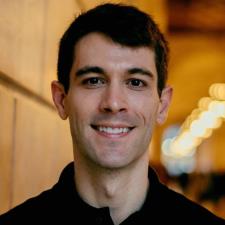
Peter Aungle
Harvard University UC Berkeley Langerian Mindfulness

My approach

The science says your mind has more power than you think.

My approach to coaching is grounded in seven years of research at Harvard on Langerian mindfulness — the study of how the mind's relationship to context, possibility, and attention shapes not just how we feel, but how we function, connect, and heal.

Most coaching works at the level of behavior. I work at the level of perception. When we change how we see a situation — when we notice what we've been treating as fixed and start holding it as conditional — the possibilities for change expand dramatically.

Sessions are one-on-one, conversational, and tailored to where you actually are. I don't bring a script. I bring a framework, a set of questions, and the genuine belief that the person across from me is more capable than they currently know.

The research foundation
My doctoral research examines how our thoughts shape our physical health and lived experience. This work — featured in Scientific American, The Harvard Gazette, Psychology Today, and Ellen Langer's book The Mindful Body — forms the scientific backbone of everything I bring to coaching.
As seen in The Harvard Gazette Scientific American Psychology Today The Mindful Body
Peter Aungle
Peter Aungle
PhD Candidate · Harvard Psychology

Focus areas

Three interconnected areas where mindfulness research has the most to offer — and where I do my deepest work with clients.

Increasing Focus
Distraction isn't a personal failing — it's often a symptom of how we've learned to relate to our work and attention. Drawing on mindfulness research, we examine the conditions under which you actually thrive and build practices that make deep focus feel natural rather than forced.
"The key to attention is noticing. The key to noticing is caring about what's in front of you."
Finding Purpose
Purpose isn't discovered, it's constructed — through the stories we tell about what matters and the questions we're willing to sit with. I help clients examine the assumptions they've inherited about success, meaning, and what a good life looks like, and build a clearer sense of what they actually want.
"When we question what we've taken for granted, we create space for something truer to emerge."
Meaningful Connection
Our research shows that how we perceive others — whether we hold them as fixed or as full of possibility — shapes the quality of every relationship we have. I work with clients on the subtle habits of mind that either open or close them to genuine connection, in relationships both personal and professional.
"Seeing someone clearly requires being willing to be surprised by them."

Background & training

Trained at the intersection of mind, health, and possibility.

I came to coaching through research. As a PhD Candidate at Harvard, I've spent seven years studying how the mind shapes health, perception, and human potential under the mentorship of Ellen Langer — one of the most influential psychologists of the past century and the pioneer of mindfulness research in the West.

That training gives me something most coaches don't have: a rigorous scientific framework for why this work actually changes people. I'm not asking you to take the value of mindful awareness on faith. I can show you the evidence.

PhD Candidate, Psychology
Harvard University · Defense May 2026
Mentored by Ellen Langer
Pioneer of mindfulness research · Harvard University
BA, Psychology
University of California, Berkeley
Harvard Teaching Excellence Award
Psychology Department Pedagogy Fellow, 2023–24
Langerian Mindfulness
Ellen Langer's research — and the work I've built on it — shows that mindfulness isn't about clearing your mind. It's about noticing more: noticing that things could be otherwise, that context matters, that the categories we use to see the world were made by people and can be remade. That noticing is where change begins.
Mind-Body Research
My doctoral research examines how thoughts shape physical health and lived experience. We've shown that the mind's relationship to the body is far more bidirectional than medicine has traditionally assumed — and that this has practical consequences for how we age, heal, and thrive.
Why it matters for coaching
The same principles that drive our research — conditional thinking, novel distinctions, openness to context — are exactly what makes coaching transformative. I bring the lab into the room.

Get in touch

Ready to start a conversation?

I work with a small number of coaching clients at a time. Send a note with a bit about where you are and what you're hoping to work on.

LocationBoston metropolitan area
FormatIn-person & Zoom
Response timewithin 24 hours

Message sent — I'll be in touch shortly.